
Creating a website is easier than ever thanks to modern website builders that combine design flexibility with user-friendly tools. In the past, building a website required coding knowledge, technical expertise, and significant time investment, but today anyone can create a professional website using visual editors and ready-made templates.
Whether you are starting a business website, launching a blog, building a portfolio, or selling products online, the right website builder helps you establish a strong online presence without advanced technical skills. These platforms are designed to simplify website creation while still offering enough flexibility to grow over time.
Website builders today range from simple drag-and-drop editors to powerful platforms focused on e-commerce and scalability. Each builder serves a different purpose, and choosing the right one affects website performance, search engine optimization, user experience, and long-term maintenance.
In this article, we explore five popular website builders: Elementor, Divi, Gutenberg Editor, Squarespace, and Shopify. We will explain their features, strengths, limitations, and ideal use cases to help you decide which platform best fits your goals.
Elementor Website Builder

Elementor is one of the most widely used website builders for WordPress and is known for its visual drag-and-drop editor. It allows users to design web pages in real time, making it easy to see changes instantly without writing any code.
Elementor provides a large collection of widgets such as headings, images, buttons, icons, sliders, testimonials, forms, and galleries. These widgets can be customized to match brand colors, fonts, and layouts, giving users full creative control over their website design.
Because Elementor is built on WordPress, it integrates smoothly with themes and plugins, making it suitable for blogs, business websites, landing pages, and portfolio sites. The platform is supported by a large global community, which means regular updates, tutorials, and third-party add-ons.
The free version of Elementor is suitable for basic websites and beginners, while Elementor Pro offers advanced features such as a theme builder, custom headers and footers, dynamic content, popup builder, and WooCommerce integration for online stores.
Elementor is ideal for bloggers, freelancers, agencies, and small businesses that want design flexibility without depending heavily on developers. To view Elementor pricing click here. Elementor can be installed directly from the WordPress plugin directory.
Divi WordPress Builder
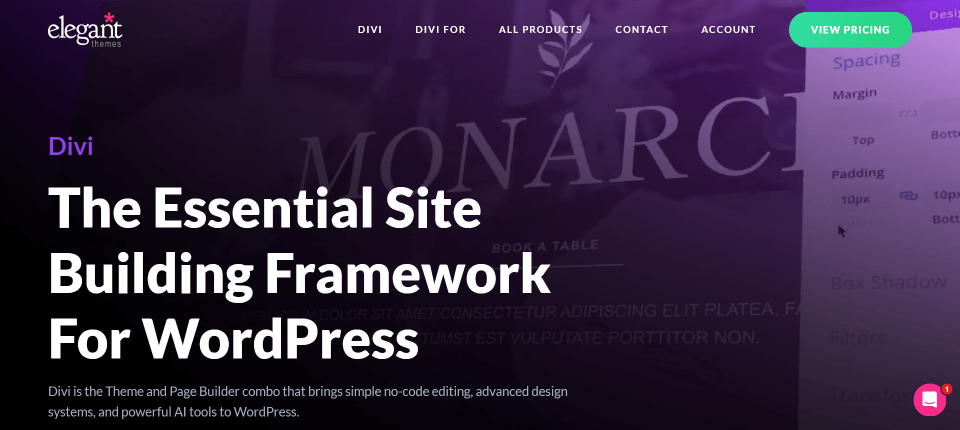
Divi is a premium WordPress theme and page builder developed by Elegant Themes. It combines visual editing with advanced design tools, allowing users to build websites without coding.
Divi features a powerful design system that lets users create global styles, reusable layouts, and consistent branding across their entire website. This makes it easier to manage large websites and maintain a uniform look and feel.
One of Divi’s standout features is its built-in AI tools, which can help generate layouts, text, and images. These tools save time and help users build pages faster, especially when working on multiple projects.
Divi offers flexible pricing options, including a lifetime plan that allows unlimited website usage. This makes it attractive for designers, agencies, and long-term WordPress users who want a one-time investment.
While Divi is powerful, beginners may need some time to understand all its features. Overall, Divi is best suited for users who want creative freedom and long-term value. Click here to view Divi pricing.
Gutenberg Editor
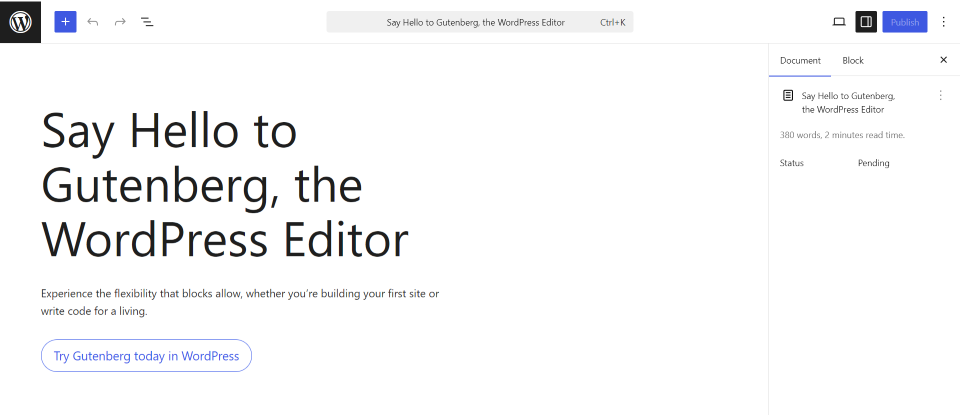
Gutenberg Editor is the default block-based editor in WordPress and is designed to make content creation faster, cleaner, and more structured. Instead of using a traditional text editor, Gutenberg uses blocks for paragraphs, images, videos, buttons, and layouts.
Each block can be customized independently, allowing users to build responsive page layouts without relying on additional plugins. This modular approach makes content easier to manage and update over time.
Gutenberg is lightweight and optimized for performance, which helps websites load faster and improves search engine rankings. Faster websites generally provide better user experience and higher engagement.
With Full Site Editing, Gutenberg allows users to edit headers, footers, navigation menus, and templates directly within WordPress. This makes it a future-proof solution as WordPress continues to develop around block-based editing.
Gutenberg is ideal for bloggers, content-focused websites, and users who prefer simplicity, speed, and native WordPress functionality over heavy design customization.
Squarespace Website Builder

Squarespace is an all-in-one website builder that includes hosting, design templates, and content management in a single platform. This makes it easy for users to launch websites without managing technical details.
Squarespace is known for its professionally designed templates that look modern and polished on all devices. These templates are responsive by default, ensuring a consistent experience across desktops, tablets, and mobile phones.
The platform includes built-in tools for blogging, portfolios, appointment scheduling, and basic e-commerce. Users can manage content, images, and products from a single dashboard without installing plugins.
Squarespace is ideal for creatives, photographers, artists, personal brands, and small businesses that want a clean and organized website. However, customization options are more limited compared to WordPress-based builders.
For users who prefer simplicity and an all-in-one solution, Squarespace offers a reliable and easy-to-manage platform.
Shopify E-commerce Platform

Shopify is a dedicated e-commerce platform designed specifically for selling products online and in physical stores. It is used by businesses of all sizes, from small startups to global brands.
Shopify provides tools for product management, inventory tracking, payments, shipping, taxes, and order handling. These features allow store owners to manage their business from a single dashboard.
The platform supports multiple payment gateways and offers a large app marketplace that allows users to add advanced features such as marketing tools, analytics, and customer support integrations.
Shopify themes are mobile-friendly and optimized for online sales. The platform can scale easily as a business grows, making it suitable for long-term e-commerce operations.
Shopify is best for users who want to focus on selling products rather than content creation. To view Shopify pricing click here.
Which Website Builder Is Best for You?
The best website builder depends on your goals and technical comfort level. Elementor and Divi are ideal for WordPress users who want design flexibility and customization. Gutenberg is best for speed, performance, and content-focused websites.
Squarespace is suitable for users who want an all-in-one platform without managing hosting or plugins, while Shopify is the top choice for building and scaling online stores.
Conclusion
Website builders have made it possible for anyone to create a professional website without coding knowledge. Each platform discussed in this article serves a different purpose, and understanding their strengths and limitations helps you make an informed decision.
By choosing the right website builder, you can improve user experience, support SEO efforts, and build a website that grows with your needs. Whether you are creating a blog, business site, portfolio, or online store, the right platform will help you achieve long-term success.